Showing posts with label Mycobacteria. Show all posts

Thursday, June 12, 2008

A Brief Bit More on Reductive Evolution in M. leprae

In a previous post I discussed the evidence for , an interesting obligate intracellular parasite.

9-banded armadillo is used for culturing M. leprae. Photo credit:© James G. Caddell, 2005At the 2008 ASM General Meeting, the Division U keynote lecture was headed by Tom Gillis of the . His talk described the same work I cited in the previous article, which showed the immense amount of pseudogenes in the M. leprae genome.

Gillis was interested in elucidating the role of these . This included asking whether or not these genes are transcribed and translated. If these pseudogenes are not providing any function, then it stems that the cells will not put energy towards their expression.

The work he discussed showed that ~44% of all M. leprae transcription was due to pseudogene expression. There doesn't appear to be a locational bias for pseudogene transcription either. Looking closely at 10 pseudogenes downstream of full-length genes, only 8 produced full-length transcripts.

More indepth in silico analysis shows that all these pseudogenes are unilogs (no duplicates present in the M. leprae genome), the vast majority lack a strong upstream, ~75% lack a translational start codon, and ~98% have one or more in-frame stop codons inserted.

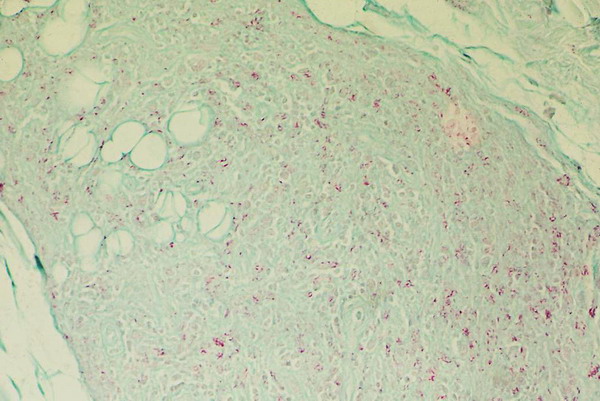
This indicates that a very small percentage of pseudogene transcripts actually create a full-length translational product. So, although the cells still create the transcript, few (if any) resources are put towards creating a functional (or detrimental) protein product. M. leprae nodules in tissue. Photo credit http://www.visualsunlimited.com/images/watermarked/423/423358.jpg

I also picked up some interesting epidemiological facts of the M. leprae genome. For one, the global M. leprae population is nearly clonal (1 polymorphism to 20,000bp compared to 1:5000 for M. tb.). However, variation in SNPs can be seen in local populations. In looking at ~60 cases from a town in India, the bug had a higher rate of diversity than compared to 3 cases in the South Eastern US or to 20 wild armadillos. Furthermore, the US cases and the wild armadillo cases were strikingly similar on an SNP scale.

I think an important point to take home from this is that M. leprae is still an evolving organism, and we are only catching a snapshot in time. It is a prime example of a parasite that has come to depend greatly on its host and has lost the ability to function outside said host.


Other articles of mine that may be of interest

(Another 2008 ASM General Meeting Lecture)

Friday, April 11, 2008

A Fatty Acid Synthetase is Necessary for Active TB Infection

ResearchBlogging.org is the most common infectious agent in the world. , and a drastic number of these are increasingly antibiotic resistant. and are becoming more commonplace everyday, especially in regions that are combating HIV infections.

As such, it is incredibly important to study how this bug works. It is one of the most difficult organisms to work with due to a wide variety of factors. These include: slow growth rate, pathogenicity, very waxy cell walls, high levels of illegitimate recombination, and a bunch of other nuances that make the mycobacteria unique among its relatives.

One unique feature of the , is their unique staining pattern. It has been shown that when treated with (the most prescribed anti-TB drug), mycobacteria lose this pattern of staining. Therefore, one can extrapolate that their outer cell wall (filled with extremely long-chain lipids, called ) plays an important role in both the lifestyle of M. tb. and its pathogenesis.

Two genes have been identified as having roles in mycolic acid synthesis, kasA and kasB. KasA has previously been shown to be essential (J Bacteriol. 2005 Nov;187(22):7596-606.), with kasB serving a non-essential accessory function. This paper, from Bill Jacobs’ lab at AECOM, shows that although kasB is nonessential, it is necessary for acid-fastness AND it has a large role in pathogenesis.

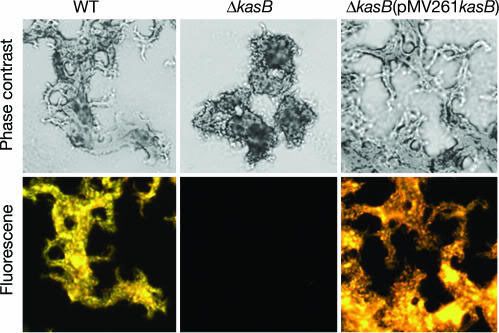
They first knocked out kasB using a . Knockouts of kasB had a severe deficiency in colony growth and a large change in colony morphology (Fig. below).Tuberculosis lacking kasB shows smaller colony morphology

Also, kasB mutants lacked acid fastness and were exceptionally more sensitive to (Fig. below).Tuberculosis lacking kasB is unable to stain acid fast

Further biochemical analysis showed that kasB is likely involved in the production of specific mycolic acids.

However, the story gets more exciting. Immunocompetant mice that were infected with the kasB mutant, showed no signs of infection—there was no formation of granulomas and no mortality. In contrast, mice infected with wild-type died within 356 days. What is interesting to note is that although mice infected with kasB mutants did not show pathology, they still had measurable amounts of bacterial growth—indicating a persistent infection that was not able to become active (Fig. below).

Tuberculosis lacking kasB cannot cause active infectionThe same study shows that kasB mutants act nearly identically to wild-type in mice that are immunocompromised. This means that mycolic acid production by kasB plays a role in the immune systems ability to hold M. tb. infections in check.

The authors suggest a variety of implications that their very exciting findings bring to light. For one, due to the phenotype, kasB mutants could be used specifically to study persistant infection. Secondly, kasB is clearly a candidate for deletion in an attenuated vaccine strain. Finally, and I think most importantly, this mutant shows a potential drug target for secondary drug therapy. Drugs that act on kasB or kasA could be developed in conjunction with rifampicin and isoniazid treatment.

XDR-TB cases are present in 41 countries, including the US. It is vital that we develop new lines of drugs and continue identifying drug targets. TB presents an event where scientists, public health departments, and drug industry must come together and work as a single entity. The amount of TB cases is ever increasing and I fear that the days of the sanitarium may once return to our country.


Bhatt, A., Fujiwara, N., Bhatt, K., Gurcha, S.S., Kremer, L., Chen, B., Chan, J., Porcelli, S.A., Kobayashi, K., Besra, G.S., Jacobs, W.R. (2007). Deletion of kasB in Mycobacterium tuberculosis causes loss of acid-fastness and subclinical latent tuberculosis in immunocompetent mice. Proceedings of the National Academy of Sciences, 104(12), 5157-5162. DOI: 10.1073/pnas.0608654104

Suggested Readings
Molecular Genetics Mycobacteria
Mycobacteria Protocols (Methods in Molecular Biology) (Methods in Molecular Biology)
The White Plague: Tuberculosis, Man, and Society
Timebomb : The Global Epidemic of Multi-Drug Resistant Tuberculosis


Friday, April 4, 2008

Recombineering: A Practical Application of Phage Biology

ResearchBlogging.orgThe most obvious use of phages is of course direct phage therapy. Although exciting, there are many other uses of phage that are just as revolutionary, but tend to slip by. In my last article, I hinted at (Short for homology-dependent, recombination-mediated, genetic engineering) This is a method whereby phage proteins are used to catalyze homologous recombination. The ramifications are huge. Mutations can be made; whole genes and operons can be knocked out with relative ease, and much more. In fact, some may say that this recently described process revolutionized genetics.

Since this system was so successful in E. coli, the Hatfull Lab at the University of Pittsburgh set out to develop this system in the
. Before this, genetic manipulation (especially gene knockouts) was highly difficult. M. tuberculosis is notoriously recalcitrant to genetic manipulation. This is due to a variety of factors including: its horribly slow growth rate, high pathogenicity, and its relatively high levels of illegitimate recombination compared to homologous recombination.

This paper, by vanKessel and Hatfull was published relatively recently (Jan 2007) and describes what is a great advance in mycobacterial genetics.

The first step was to identify potential recombination proteins encoded by phages. These proteins are presumed to be necessary for proper facilitation of lysogenic integration and DNA replication. Looking at the functions of the
“Red” recombination system, (used for recombineering) one can find functional homologs in other systems. The Red system uses three proteins: exo, beta, and gam. Exo acts as a 5’-3’ dsDNA dependant exonuclease, beta acts to bind ssDNA and promote annealing, and gam functions to inactivate an alternative host recombination pathway (the RecBCD system).

Using this as the basis for comparison, one first comes across the Rac of E. coli. This prophage encodes two proteins called RecE and RecT that function identically to the exo and beta genes respectivly in the Red system, without significant sequence similarity. One then can look at the published mycobacteriophage genomes (30 at the time of publication, soon to be 50) and search for functional analogs of either the Red or Rac system. The authors found that in one phage of the 30, recET homologs were found. This phage, Che9c, contains two genes that are each around 30% identical to the Rac prophage RecE and RecT (at Che9c gp60 and 61).


Sequence alignment of recombination genes

Biochemical analysis showed that RecE and RecT function nearly identically to the Lambda phage exo and beta.

The authors placed Che9c gp60 and 61 onto a plasmid under an acetamide promoter (high expression of these genes under a constitutive promoter was determined to be toxic) and transformed into M. smegmatis (a fast growing, non-pathogenic relative to M. tuberculosis)

These cells could then be transformed with a dsDNA leuD knockout substrate containing 1,000bp homology on each side (500bp flanking sequence and 500bp leuD sequence) of a Hyg resistance cassette. Upon induction of the RecET homologs, allelic exchange was shown to occur at a measureable frequence (8x10^-4 recombinants per ug / cell competancy) by detecting the presence of leucine auxotrophs with hygromycin resistance. This event was shown to require both Che9c gp60 and gp61, indicating that both RecE and RecT functions were needed.

This method was shown to work not only in M. smegmatis, but also in M. tuberculosis and at different genetic loci.

Other work showed that 1,000bp homology was not necessarily needed and that substrates could have as little as 50bp (the current standard is now 500bp homology) flanking sequence to the knock out marker.

This method will certainly revolutionize the ability to genetically manipulate the Mycobacteria. The possibilities are endless. Not only can one create knockouts, but also insert point mutations, amber mutants, add frameshifts, and add His-Tags. This is not to mention that all these methods can be applied not only to the bacterial genome, but also phage.

This is a wonderful example of phage-based technology with a practical and immensely helpful function.


van Kessel, J.C., Hatfull, G.F. (2007). Recombineering in Mycobacterium tuberculosis. Nature Methods, 4(2), 147-152. DOI: 10.1038/nmeth996

Book Recommendations

For more information regarding how we work woth the Mycobacteria, this "handbook" describes all the major protocols.
Mycobacteria Protocols (Methods in Molecular Biology) (Methods in Molecular Biology)

As always, I recommend this book for anyone interested in a well described overview of mycobacterial genetics.
Molecular Genetics Mycobacteria

Finally, this is one of my favorite books on bacteriophages. It describes all the major topics in phage biology and their applications.
The Bacteriophages


Monday, March 31, 2008

RecQ's Role in Illegitimate Recombination

ResearchBlogging.orgis a ubiquitous event that occurs in every species; it is necessary for the production of unique gametes, it is involved in DNA damage repair, it provides a mechanism for evolution, and it is a required action for many viruses and phages to undergo nucleic acid replication.(My discussion here will focus entirely on recombination in prokaryotes and their viruses)

There are three different types of recombination: homologous recombination--where DNA of significant sequence similarity recombines, non-homologous recombination--where DNA without significant sequence similarity recombines (usually along gene boundaries), and finally there is illegitimate recombination--where DNA recombines randomly.

Although DNA is surprisingly fluid, there are enzymes that mediate recombination--by initiating DNA binding, strand invasion, and stabilizing ssDNA intermediates. Also, of important note, is that organisms have varying degrees of recombination levels. A classical example occurs within the Mycobacteria. Mycobacterium smegmatis has relatively low levels of illegitimate recombination (IR), while M. tuberculosis is notorious for high levels of IR compared to homologous recombination. This raises a question that can be phrased in a few ways. "What enzymes are responsible for IR?" or perhaps, "What enzymes for homologous recombination are lacking?"

I performed a cursory search of the Rec-type proteins in both M. smegmatis and M. tuberculosis, and found that M. smegmatis contained a RecQ homologue, while M. tuberculosis did not. A literature searched showed that RecQ is a DNA helicase that is involved in the suppression of IR (Hanada and colleagues in this paper published back in 1997) in E. coli.


The paper describes a rather elegant experiment to see the frequency of IR by utilizing a specialized transducing phage. Briefly, a specialized transducing phage is a lysogenic phage that, upon excision from the chromosome, accidentally packages host DNA located directly adjacent to the integrated. This event is usually very rare and is catalyzed by an IR event. Therefore, any changes that increase IR frequency will increase the frequency of transducing particles. In this instance, the authors used , and a screened for the production of transducing particles.

The authors found that in a recQ minus strain, the number of transducing particles increased 10-100x higher than wild type (depending on conditions and marker used). This increase could be removed by the complementation of recQ. Furthermore, the authors found that this pathway was independent of the well characterized RecA pathway by creating a recQ / recA double mutant and finding no difference in IR from the recQ mutant.

They discuss further associations with the RecJOF pathways, however, delving further into a discussion on Rec pathways is beyond the scope of what I can discuss here. (More information can easily be found by searching Google for "Rec proteins")

Since this study was published back in 1997, it made me curious as to whether anyone has studied the lack of recQ in M. tuberculosis, its presence in M. smegmatis, and their drastic differences in IR. As it turns out, no one has (to my knowledge).

I am currently interested in examining recombination functions necessary for phage replication in the Mycobacteria. You can read about my and I will post a recent update here (coming soon). I'm currently working on knocking out recQ in M. smegmatis and expressing recQ in M. tuberculosis and asking if there are effects on phage infection. There is already a system in place that overcomes IR in M. tuberculosis to allow allelic exchange, ( Nat Methods. 2007 Feb;4(2):147-52.) and I am testing this system as well.

For more information on Mycobacterial Genetics, I suggest the following book which is the most recent text on the subject.

Molecular Genetics Mycobacteria


Hanada, K., Ukita, T., Kohno, Y., Saito, K., Kato, J., Ikeda, H. (1997). RecQ DNA helicase is a suppressor of illegitimate recombination in Escherichiacoli. Proceedings of the National Academy of Sciences of the United States of America, 94(8), 3860-3865.


Saturday, March 22, 2008

Reductive Evolution in Mycobacterium leprae

ResearchBlogging.orgis quite an interesting bug. It is significantly related to (the causative agent of ), yet is a very different illness.

Unlike other , M. leprae is unique in the fact that it is an obligate intracellular . Replication of the bacterium cannot occur outside of host cells. To date, no synthetic media has been able to support M. leprae replication. Since M. leprae is required to parasitize, it stands to reason that discovering the genetic components of this lifestyle will provide possible venues for drug therapy against this debilitating illness.

It is clear that M. leprae is closely related to the other Mycobacterium leprae seen in a skin lesion samplemycobacteria, by Cole et al. analyzes the genetic sequence of M. leprae and compares it to M. tuberculosis. By doing this, we have the potential to deduce how M. leprae has evolved and which genes are essential for mycobacterial replication outside of host cells.

One of the first things we see is that M. leprae has a 1.6Mbp SMALLER genome than M. tb. (~3.2Mbp and ~4.4Mbp, respectively). Of this much smaller genome in M. leprae, only about 50% of it contains protein coding genes (compared to 90% in M. tb.). The rest of the M. leprae genome is 27% recognizable pseudogenes (with a number of 1,116 compared to only 6 in M. tb. ) and 23% non-coding sequence (possibly as regulatory elements or genes mutated beyond recognition).

It is clear that there has been a tremendous amount of downsizing in the M. leprae genome. The large loss of sequence, along with the large amount of pseudogenes, the low number of protein coding genes, and the huge amount of non-coding sequence all indicate that M. leprae has undergone a clear and classical example of reductive evolution.

The authors go into much specificity about which genes and pathways have been lost in M. leprae compared to M. tb. One highlight is that the central metabolism of M. leprae is much different than in other mycobacteria because of a variety of gene losses. M. leprae can not utilize acetate or galactose as a carbon source. Also, it has lost all enzymes needed to function in an anaerobic or microaerophilic environment. Even it’s aerobic electron transport chain has been truncated—indicating that it can not produce ATP from NADH, and it needs to rely on low energy gain pathways to recycle its reducing equivalents.

In looking at , the authors found only one a -binding protein which may cause a tropism for myelin-producing cells (which M. leprae has). However, M. tb. also has this gene, so it’s purpose is not yet known.

M. leprae also has a handful of genes that are not present in M. tb., including eukaryotic like adenylate cyclase and uridine phosphorylase. Also, two transport systems an ABC sugar transporter and a unique divalent metal ion transport system.

I am interested to see how this study affects future drug development for anti-leprosy drugs. Also, this study should help M. tb. researchers, due to the fact that essential genes are likely conserved in these two species. With the advent of of M. tb. and the persistence of M. leprae in our population, it is imperative that new methods of treatment be developed.


Cole, S.T., Eiglmeier, K., Parkhill, J., James, K.D., Thomson, N.R., Wheeler, P.R., Honoré, N., Garnier, T., Churcher, C., Harris, D., Mungall, K., Basham, D., Brown, D., Chillingworth, T., Connor, R., Davies, R.M., Devlin, K., Duthoy, S., Feltwell, T., Fraser, A., Hamlin, N., Holroyd, S., Hornsby, T., Jagels, K., Lacroix, C., Maclean, J., Moule, S., Murphy, L., Oliver, K., Quail, M.A., Rajandream, M., Rutherford, K.M., Rutter, S., Seeger, K., Simon, S., Simmonds, M., Skelton, J., Squares, R., Squares, S., Stevens, K., Taylor, K., Whitehead, S., Woodward, J.R., Barrell, B.G. (2001). Massive gene decay in the leprosy bacillus. Nature, 409(6823), 1007-1011. DOI: 10.1038/35059006


Thursday, September 27, 2007

Research Synopsis

So my grad school application process continues. This is part of my personal statement....it is a synopsis of my research. Let me know what you think, any changes I should make, etc. Thanks in advance!


For the past two and a half years, I have had the privilege to work as an undergraduate researcher in the lab of Dr. Graham Hatfull at the University of Pittsburgh. Dr. Hatfull is one of a unique group of researchers adamantly recruiting young students into biological research. Students as young as 6th and 7th grade are able to work in his lab through his Phagehunting program. Although I did not begin my work in the program at that young of an age, many would consider my start as a college freshman early compared to most.

I began my research in January of my freshman year. The first project was to use bioinformatic methods to analyze and annotate the genome of a Bacillus phage, MP15. Utilizing programs such as DNA Master, Glimmer, and GeneMark, I called the most likely protein coding regions in the genome. These putative genes were then compared to GenBank databases to assign potential functions and evaluate the novelty of the phage’s genome. Not surprisingly, this phage proved to be highly novel; its genome had a large amount of genes with no significant sequence similarity to those genes in the databases.

Having enjoyed my first research experience, I then continued work in the lab, moving from bioinformatics into wet lab projects. I became part of a larger project to isolate and characterize novel mycobacteriophages on Mycobacterium smegmatis. I isolated, amplified, and concentrated a novel mycobacteriophage named BPs. Using Sanger sequencing procedures, the phage’s genome was sequenced. The final sequence was analyzed and annotated. Lysogeny experiments showed BPs to form stable lysogens in M. smegmatis, likely integrating at a tRNA^Arg gene in the host. Furthermore, host range studies showed that BPs was able to infect not only its initial host, but also M. chelonae, M. bovis BCG, and notably, M. tuberculosis (M. tb.).

Following up this host range study of BPs, I began to characterize the ability of over two hundred mycobacteriophages (published and unpublished) to infect M. chelonae, M. bovis BCG, and M. tb. Dr. Hatfull approached me with a few ideas for projects that could stem from the large amount of host range work I was performing. One of these projects involved the discovery of a phage capable of performing generalized transduction in M. tb.


Generalized transduction occurs when a phage capsid accidentally packages host DNA, resulting in a viral particle capable of inserting that DNA into a new cell. This mechanism has been exploited in a variety of bacterial systems. Currently, there are only two published phages with the ability to transduce Mycobacteria; Bxz1 and I3. However, neither of these is able to infect or transduce M. tb. My goal was to find which of our published phages could infect M. tb. and which could function as transducing phages. I developed and performed transduction assays with two different genetic markers. At the same time, I finalized the host range of our published phages.

The results showed that 11 of our 30 published phages were able to transduce M. smegmatis and that 7 of these 30 were able to infect M. tb. However, no phages appear in both groups. Bioinformatic analysis of putative genes showed that there was no particular gene present only in the group of M. tb. infecting phages. Rather, the only genetic element common among M. tb. infectors is the presence of cohesive genetic termini. Those phages capable of mediating generalized transduction all have terminally redundant genetic termini. Currently, I am asking whether or not the presence of terminally redundant ends prevents phage from infecting M. tb.

The nature of a phage’s genomic ends determines how the DNA circularizes upon infection. Phages with cohesive termini circularize via complementation; while phages with terminal redundancy circularize by homologous recombination. M. tb. is notorious for their large amount of illegitimate recombination, which potentially may inhibit phages with terminal redundancy from circularizing and subsequently replicating. Previous studies have shown that recombination proteins are necessary for certain phages with terminal redundant ends, such as Salmonella phage P22, to circularize and replicate. Previous work with mycobacteriophages has discovered functionally analogous proteins for recombination in Mycobacteria. These proteins, encoded by phage Che12, have been successfully utilized to promote homologous recombination in both M. smegmatis and M. tb. My current work is establishing whether the presence of these proteins can overcome a recombination deficiency in M. tb. and allow terminally redundant phages cause infection. If this is true, generalized transduction in M. tb. may be a possibility.

Aside from learning laboratory techniques and critical thinking, this research experience has provided me with the opportunity to present my work at a wide variety of scientific meetings. These meetings include: the 2005 Molecular Genetics of Bacteria and Phages Meeting, the 106th and 107th Annual American Society for Microbiology General Meetings, along with meetings hosted by the University of Pittsburgh.

My work with phage has opened my mind to the world of microbial interactions. The constant flux between host and pathogen, on any scale, is vast and decidedly interesting. Studying these interactions can provide the focus for a wide range of projects. Microbial interactions have components in vaccine development, industrial fermentations, novel antimicrobial development, genetic tool creation, and evolutionary studies. It is my hope that graduate school will allow me to delve deeper into the interactions between microbes and humans, themselves, or their environment.


This is the first 2/3 of a ~1000 word essay. The remaining will be geared towards which ever school I am applying too. Thanks for your opinions.