Monday, December 28, 2009

Not All Mice Are Created Equal When it Comes to Gonorrhea

by E. Ohneck

ResearchBlogging.orgNeisseria gonorrhoeae, the causative agent of the sexually transmitted infection, gonorrhea, is a Gram-negative diplococcus and an obligate human pathogen. An estimated 800,000 cases of gonorrhea occur each year in the United States (1). The most common sites of infection are the cervix and the male urethra, and symptomatic infection is characterized by a purulent exudate composed of numerous polymorphonuclear leukocytes (PMNs) containing intracellular gonococci (3).

The development of whole model systems to study N. gonorrhoeae infectGonococciion is important, as several different cell types are involved in host response. Currently, infection in males is examined through urethral inoculation of male volunteers, and results indicate a strong innate immune response characterized by induction of proinflammatory cytokines (3). Due to the risk of serious complications and the frequency of asymptomatic infection in women, such volunteer infection models cannot be utilized for female infection, and studies are currently limited to tissue culture cells and a developing 17β estradiol-treated BALB/c mouse model (3).

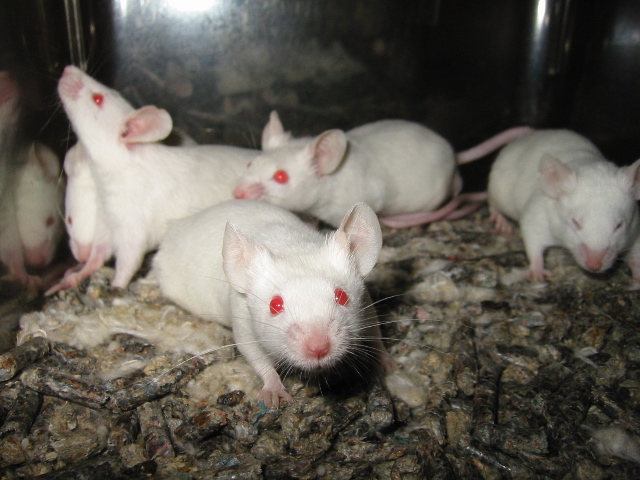
To better characterize the innate immune response to gonococcal infection in BALB/c mice, and to determine if response to infection varies among different inbred mouse strains, Packiam et al analyzed the ability of BALB/c, C57BL/6, and C3H/HeN mice to support vaginal colonization by N. gonorrhoeae and mount an inflammatory response. Their results show the establishment of a productive infection in BALB/c mice characterized by a large influx of PMNs and the induction of proinflammatory cytokines, including TNFα, IL-6, and MIP-2, a homolog of human IL-83.

C57BL/6 mice, however, while able to support colonization by N. gonorrhoeae to the same levels as BALB/c mice, did not mount an inflammatory response, and thus might provide a model for asymptomatic infection (3). Finally, C3H/HeN mice were inherently resistant to N. gonorrhoeae by a mechanism other than an overwhelming innate response, as shown by their inability to support colonization and a lack of PMN influx upon infection (3). Taken together, these results suggest an import role for host genetic background in determining susceptibility to N. gonorrhoeae.

This phenomenon is not restricted to N. gonorrhoeae. In fact, variation in vulnerability to specifiBalb/c Micec pathogens among different inbred mouse strains has been observed for numerous bacteria, including Mycobacterium tuberculosis, Salmonella typhimurium, and Legionella pneumophila (2).

These results, therefore, raise several important questions. What genetic factors mediate susceptibility to specific pathogens in otherwise healthy individuals? What bacterial systems and components are involved in determining host genetic background-specific susceptibility? How can we exploit these host-pathogen relationships in the development of more efficient therapies and vaccines?

Bacterial disease is often studied from two distinct angles: microbial mechanisms of pathogenesis and virulence, and host defenses against microbial invaders. Currently, however, more emphasis is being placed on examining the host-pathogen interface, and studies such as this elucidate the demand for the breakdown of the barrier between microbiology and immunology. We cannot fully understand microbial disease mechanisms without taking into consideration host, pathogen, and the complex interactions that mediate their relationship.


Sources:
1. CDC. Increase in fluoroquinolone-resistant Neisseria gonorrhoeae among men who have sex with men—United States, 2003, and revised recommendations for gonorrhea treatment, 2004. MMWR Morb Mortal Wkly Rep 2004; 53: 335 – 338.

2. Kramnik I and Boyartchuk V. Immunity to intracellular pathogens as a complex genetic train. Curr. Opion. Microbiol. 2002; 5:111 – 117.

3. Packiam M, Veit SJ, Anderson DJ, Ingalls RR, & Jerse AE (2010). Mouse strain-dependent differences in susceptibility to Neisseria gonorrhoeae infection and induction of innate immune responses. Infection and immunity, 78 (1), 433-40 PMID: 19901062


Other Articles of Interest:
Out With the Bad: Efflux in Klebsiella
Nitric Oxide Synthase Isn't Just Used By Our White Blood Cells
A Home for the Bugs in Our Appendix

Monday, December 21, 2009

Noisy and Bistable Gene Expression: Why Genes and Environment Aren't Everything

by Tim

This post was chosen as an Editor's Selection for ResearchBlogging.orgClassically, a cell's phenotype was thought to be a product of its genetic background and its environment. All changes within a cell would be due to the cell's genetic capability to react to the environmental changes happening around them. However, as we begin looking more in depth at cell populations at the single cell level, we are finding that this paradigm isn't always true.

In this two part series, I want to examine how genetically identical cells in equNoise in Gene Expressional environments can undergo very different developmental changes. Specifically, we will look at the induction of competence in Bacillus subtilis and the development of persister cells in E. coli. In both of these cases, the cells are genetically and environmentally identical. But in each case, a subset of the population undergoes a drastically different developmental change.

As Bacillus begins to enter stationary phase, a subpopulation of cells begins to become competent, allowing a small percentage of cells to take up DNA from the environment. This process is activated by the ComK protein, which also activates its own expression in a positive feedback loop. As ComK levels increase, a threshold is hit, leading to a rapid increase in ComK production, and a subpopulation of cells begin to enter competence. This leads to the question as to the mechanism which allows only a subset of cells to enter competence.

Back in 2007, the Dubnau Lab at UMDNJ published a paper in Science discussing how very slight variations, or noise, in the amount of comK mRNA could lead to certain cells becoming competent, while others remained vegetative. The authors used fluorescent in situ hybridization to measure the exact amount of comK mRNA in individual cells. They found that in early stationary phase the number of comK mRNAs in the total population increased from 0.7 to 1 per cell. As the population average increased ever so slightly, a subpopulation began switching to competence. Thus, as the average was shifted, a small subset was well-enough above the mean to hit the ComK threshold and enter competence. Noise in gene expression dictated which cells became competent.

Those cell to cell variations of comK expression could be due to intrinsic noise, events such as mRNA decay or transcription initiation rates, or extrinsic noise such as the concentration of polymerases or transcription factors. To test which of these contributed to comK variability, the authors again used the in situ hybridization technique to measure comK mRNA as well as a control mRNA under a comK promoter. Extrinsic variations should affect both mRNAs equally, while intrinsic variations would only be acting on a single locus. Counting the number of mRNAs immediately before the induction of competence, they found that the number of each mRNA type was uncorrelated, indicating that random intrinsic noise was responsible for the variations in comK expression.

So what does this all mean?

In essence, we must first understand that when we see a population with our favorite gene (OIllustration of expression curve and competence threshold. Adapted by P. HUEY/SCIENCEFG) expressed at level "X," really "X" just represents the mean expression of the population, and that per cell, the expression of this gene falls somewhere in a normal curve around "X." Cells with slightly higher or lower levels of OFG can end up having large effects on phenotypic outcomes, particularly if OFG is a regulator.

Importantly, it shows that not all phenotypic outcomes are entirely the sum of genetics and environment, but can be due to completely random events within the cell.

It also raises the question as to why the whole population would only want a subset to become competent. Perhaps it is a form of the bacteria hedging their bets, allowing only a small percentage to take a great risk (i.e. bringing in harmful DNA, delaying sporulation) to receive great reward (new genetic information to outcompete others), while the remaining population continues laissez faire. But this can be a topic for next week when we take a look at bet-hedging in persister cells.


Source:
Maamar H, Raj A, & Dubnau D (2007). Noise in gene expression determines cell fate in Bacillus subtilis. Science (New York, N.Y.), 317 (5837), 526-9 PMID: 17569828


Other Articles of Interest:

Wednesday, December 16, 2009

Site Announcements

1) As you can see, Blogging for Bacteriophages has now become "The Times Microbial" @ Phagehunter.Org. After some long thought, I decided to change the name in an effort to address the fact that the site covers material in the microbial world beyond just bacteriophage biology. This, along with the layout changes, are part of a larger transformation that will take place VERY slowly over the next year or so.

2) Articles that are written on peer-reviewed research (which make up the vast majority of the posts here) are aggregated at the site ResearchBlogging.org. Relatively recently, their editors have begun selecting notable articles as "Editor's Selections" each week. I am proud to announce that two of our articles here have been selected thus far. These are denoted by the "Editor's Selection" badge, as well as, a post tag to allow quick access to the best of the articles published here.

3) As always if you have any questions or comments, send me a message. Feedback is always appreciated.

Thanks!

Friday, December 11, 2009

Nitric Oxide Synthase Isn't Just Used by Our White Blood Cells...

ResearchBlogging.orgPhagehunter.org is proud to have J. Kandler, a microbiology graduate student at Emory University, present to us this interesting post on a defense feature common in our immune system, but being utilized by bacteria as well.


After Halloween, I came across this spooky article in Science describing yet another way bacteria are dodging antibiotics. Don’t worry, there’s a silver lining! Gusarov and his colleagues may have found a new target for the antibiotic industry, bacterial nitric oxide synthase (bNOS).

It turns out bNOS is present in numerous Gram-positive species, along with some Actinobacteria and even a member of the Archaea (Natronomonas pharaonis, a resident of pH 11 soda lakes in Kenya and Egypt that likes its NaCl to the tune of 3.5 M). While most of the organisms cited in the paper are nonpathogenic, there are a few notable nasties you might recognize, including Bacillus anthracis (anthrax) and Staphylococcus aureus (MRSA). Though less extravagantly equipped than its eukaryotic cousins, bNOS is still able to produce NO/NO+ with the help of cellular reductases. The common reason for bNOS in all these species remains elusive, but Gusarov may be onto something with his antibiotic-killer theory.

Using three different but similar antimicrobials (acriflavine [ACR], pyocyanin [PYO] and cefuroxime [CEF]), Gusarov demonstrates that bNOS provides two important survival mechanisms: 1) direct detoxification of some antimicrobials the and 2) destruction of reactive oxygen species. He performed a screen of B. subtilis growth rates against 21 different antimicrobials and chose 3. The first two are both highly hydrophobic and contain conjugated 6-membered rings, making them likely DNA intercalators. However, while ACR is a man-made drug that fights sleeping sickness, PYO is a natural bacteriocin produced by Pseudomonas aeruginosa and seems to be a natural weapon against competitors in the soil. The third, a cephalosporin, is a modified version of the well-known beta-lactam group of antibiotics and was developed in the 1970’s in response to growing concern over beta-lactamases.

Gusarov moves on to show that ACR—but neither PYO nor CEF—is directly neutralized by NO/NO+, specifically at its dangerous arylamino groups. The other, and far more important, function of bNOS is revealed when Gusarov starts monitoring the levels of superoxide dismutase (SodA) transcription in a B. subtilis nos null mutant. Bacteria without bNOS fail to boost transcription of sodA in late log phase, rendering them helpless against the onslaught of radicals and oxidizers present in stationary phase. As a result, mutant B. subtilis reaches stationary phase at ~60% of the cell density reached by WT.

Taken together, these data cast bNOS as a major factor in the cellular response to reactive oxygen species, with a minor talent for direct NO/NO+ neutralization of antimicrobials. Perhaps the original role of bNOS was to help prepare the cell for the stressful conditions of stationary phase and keep up with competitors, but now it seems that the protein can double as a shield against a plethora of antimicrobials. If we are able to find a bNOS inhibitor in the future, it might help decrease bacterial load in non-Gram-negative infections by supplementing conventional treatments, in the style of augmentin. Furthermore, given the high involvement of ROS in the body’s innate immune response, taking out bNOS could make our natural defenses all the more potent.


Source
Gusarov I, Shatalin K, Starodubtseva M, & Nudler E (2009). Endogenous nitric oxide protects bacteria against a wide spectrum of antibiotics. Science (New York, N.Y.), 325 (5946), 1380-4 PMID: 19745150


Other Articles of Interest
Out With the Bad: Efflux in Klebsiella pneumoniae
Antibiotic Treatment: Increasing the Rates of Genetic Exchange
Utilizing Natural Killers: Phage Based Antimicrobials

Wednesday, December 9, 2009

Last Month in the Blogs (#2)

In case you missed them:

Hiroshi Nikaido, at Small Things Considered, tells us about the limitations of lysogeny broth (LB media, often a misnomer for "Luria Broth" or "Luria-Bertani media"). A highly interesting read, it points out that most of the large peptides in LB are unusable by cells, leading to a lower cell density than optimal. Differences in salt content, as well as the presence of bile salts, cause changes in the cell envelope as well as activates specific efflux pumps, which would normally not be active.

A. J. Cann, at MicrobiologyBytes, writes a review on an article demonstrating that bacterial infection within the gut can drive proliferation of intestinal stem cells, which can lead to cancer in organisms with a genetic predisposition. A good read to go along with the other articles on gut bacteria that I've brought up lately.

And finally, to continue our gut-bacteria discussions, at BiteSizeBio, Suzzane goes point by point on food-borne pathogens. The ones that we should watch out for, and how they get their in the first place. If you find this article interesting, you may find this one on how bacteria stay protected in vesicles on greens interesting as well.

Enjoy!

And as always, questions, comments, suggestions, etc. are more than appreciated!

Saturday, December 5, 2009

How Helicobacter Gets Around

ResearchBlogging.org
Helicobacter pylori is the only bacterium (that I know of) that is capable of colonizing the rather intimidating environment of the human stomach. A very low pH, and a thick viscous and elastic mucus, make for a difficult niche to inhabit. But for a bacterium, the payoffHelicobacter must move trhough thick mucus to gain protection in the gastric pitss are huge: a constant supply for nutrients, no other prokaryotic competition, and little interaction with the immune system.
It is well described that to survive the low pH, Helicobacter utilizes a urease system. Taking in urea present in the stomach, the bacterium creates and secretes ammonia, raising the pH to nearly neutral. It is also known that to escape the lower pH of the stomach lumen, and to successfully colonize, Helicobacter must move through the thick gastric mucus lining the stomach into gastric pits within the stomach epithelium. The question that this phenomenon raises is how the bacterium is able to be motile through the very thick, viscous, and elastic mucus.

Some ways Helicobacter could solve this problem include: very strong flagellar power using brute force to tunnel through the mucus, or via secretion of mucus degrading enzymes to breakdown the mucus making it more liquid. It is known that as the pH of gastric mucus is raised, the gel-like structure becomes less organized and more liquid. Relatively recently, a study in the Proceedings of the National Academy of Sciences, has directly connected the raise in pH due to Helicobacter urease, to motility and liquidity.

Using techniques in rheology that are well beyond my expertise, the authors show that in the presence of both urea and Helicobacter, low pH mucus becomes both less viscous and elastic, and moreA random bacterial walk toward a chemoattractant liquid as the pH raises. However, without urea, Helicobacter is unable to transform the mucus from a gel-like structure.

Next, using live cell imaging techniques, the authors demonstrated that Helicobacter cannot be motile in raised pH mucus gel, without urea, but can be highly motile in mucus solution at the same pH. These two findings indicated that motility was a direct function of the structure of the surrounding mucus, which was a direct function of the pH. Finally, using a dye that fluoresces at more neutral pH, the authors were able to show that at the exact point that the pH is raised by Helicobacter, the mucus becomes more liquid, and the cells become motile.

These findings show that Helicobacter uses the same urease system to both change the pH to a more hospitable level, while at the same time alter the structure of mucus to allow motility to the more protected gastric pits for colonization.


Source:
Celli, J., Turner, B., Afdhal, N., Keates, S., Ghiran, I., Kelly, C., Ewoldt, R., McKinley, G., So, P., Erramilli, S., & Bansil, R. (2009). Helicobacter pylori moves through mucus by reducing mucin viscoelasticity Proceedings of the National Academy of Sciences, 106 (34), 14321-14326 DOI: 10.1073/pnas.0903438106